Water

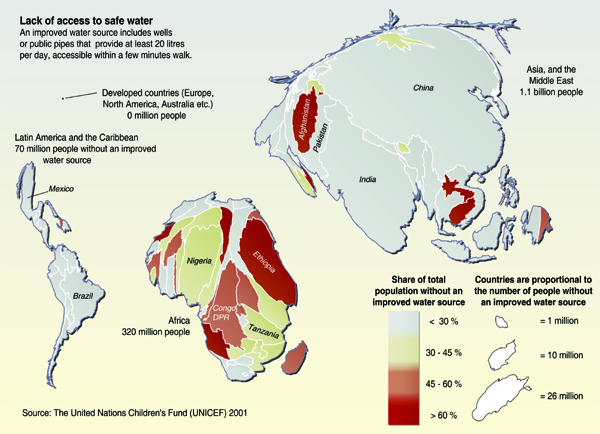
In some regions of the world, water scarcity has already become an acute problem. The situation will deteriorate dramatically in the decades to come if we continue to overuse, waste and contaminate the resources available at local and regional levels. The IAASTD warns against bitter disputes within societies, but also between states, right up to violent conflicts and wars over water. Agriculture could reduce water problems by avoiding the cultivation of water-intensive crops such as maize and cotton in areas which are too dry for them, as well as by improving inefficient cultivation and irrigation systems that also cause soil salinisation. Other practices that could be avoided include the clearance of water-storing forests, evaporation over land left lying fallow and the (in some parts of the world) dramatic overuse of groundwater sources.
Pollution, contamination and over-fertilisation

The pollution and contamination of entire watercourses is another grave problem. Water carries many substances: fertile soil that has been washed out, as well as nutrients which in high concentrations over-fertilise watercourses and deprive them of oxygen. Water can also contain pesticides, salts, heavy metals and sewage from households, as well as an enormous variety of chemical substances from factories. While many rivers and lakes in Europe are slowly recovering from direct pollution through industrial discharges, the problem is massively increasing in densely populated regions of Asia and other emerging economies. The use of water further downstream is becoming increasingly risky and expensive, sometimes impossible. Toxic substances in the groundwater can make this treasure unusable for entire generations. Agriculture is polluting water bodies with pesticides and huge amounts of nitrogen. The number and size of so-called “dead zones” in estuarial areas of large streams, where marine life is suffocating due to over-fertilisation, are expanding."Runoff and seepage of synthetic fertilizers and concentrated sources of livestock waste damage aquifers, rivers, lakes, and even oceans - with costly effects on drinking water quality, fish habitat, safety of aquatic food, and recreational amenities.“ (Global, p.10)
Responsible use and common distribution

The IAASTD recommends irrigating agricultural areas more efficiently than today and intensifying the “water harvesting” of precipitation. The report describes easy methods to avoid water evaporation directly from the soil, to increase the water storage capacity of soil and vegetation, and to build local water reservoirs and irrigation systems. According to the IAASTD, in the world’s most vulnerable regions there is hardly any other measure as effective for the stabilisation of the hydrological cycle as the conservation and expansion of forests and trees.
Decisive for the sustainable use of our water resources are water management systems which take all users of a watershed into account and provide them with the necessary rights and duties to maintain this common property. The IAASTD does not rule out that the water-scarce regions of Africa and Central Asia will have to import food products from regions with abundant water resources in the future. Today, this export of “virtual water” already takes place on a large scale, although in the opposite direction. Water embedded in cash crops is imported from developing countries, flowing mainly as animal feed into the meat production systems of industrialised countries.